Sunday, September 28, 2008

Occult Collage

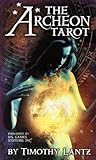
The Archeon Tarot, by Timothy Lantz.  Published by U. S. Games Systems, Inc., 2005.

Ratings
Historical Significance:  Nil
Artistic Appeal:  High
Symbolic Resonance:  Moderate
Evocative Potential: Moderate

What drew me to this deck was the art graphics which are quite unique as far as Tarot decks go.  The style is more along the lines of graphic illustration used in magazines than the more common iconographic line drawings we've come to expect from Tarot cards.  The images are pleasing and sometimes dramatic.  They have an unspecific and nebulous quality typical of such graphics.


Lantz started his work on this deck in 2003.  Of it he says:
Each of the 78 images in the Archeon Tarot relies heavily on the collection of symbols that inhabit my mind.  It is a curious mixture of traditional and non-traditional imagery from varied sources thrown into the blender of my subconscious. There will be things that you recognize, cultural and social conventions, but their interpretations may not always be what you would expect.


Personally, I like the artwork, but not everyone seems to.  The problem for me with this deck is that, although the photoshoped graphics are appealing, they lack depth.  The use of symbols is suggestive and thin without clearly tying symbol to image content. The evocative quality that is so important in divination does not work so well with this deck for me although one might expect it to as the images are certainly more evocative than linear. It could be that I simply haven't used it enough for evocation to develop.

The pamphlet is thin with two to three paragraphs per trump and only a few sentences per pip card.  The meanings described in the pamphlet do not correspond with the images as well as they could.

Overall, I like the artwork but have not found the deck to be very useable.  But, you might have a different experience.

Wednesday, September 24, 2008

Remains from a Celtoid-Hippy Dark Ages

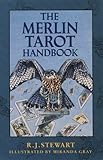
The Complete Merlin Tarot: Images, Insight and Wisdom from the Age of Merlin

Ratings
Historical Significance: Low
Artistic Appeal: Moderate
Symbolic Resonance: Moderate
Evocative Potential: Moderate

This was one of my first decks.  It appears to be out of print at this time.  Overall I liked it and used if for quite awhile.  I was drawn to it out of an old interest in the Arthurian tales--after reading Mary Stewart's The Crystal Cave (The Arthurian Saga, Book 1), etc.

The trump cards are decently executed color paintings, and better than many decks currently out there.  The images feel very earthy.  They give one a sense of a kind of hippy-Celtic dark ages.  The standard suits are replaced with Birds (Swords), Serpents (Clubs), Fish (Cups), and Beasts (Coins).  The pip cards are simple flat diagrammatic line-drawings on single-color backgrounds.

Complete Merlin Tarot

I liked this deck at the time because it resonated quite well with Mary Stewart's portrayal of Merlin as a type of late druidic, post-Roman prophet, his nebulous prophetic power tied to the old traditions and to the earth.  The symbols are a bit of a mix.  They maintain only a fleeting formal relation to the classic occultist decks.  There is a fair amount of celtic imagery incorporated but not as much or as well thought out as one might expect.  My biggest complaint with using the deck for divination is that the pip cards are so "flat" in their look and feel that they don't really evoke much when reading with them.  One is left to rely on the written explanations.  The accompanying book is somewhat detailed and expands on the themes of the cards fairly well.

Sunday, September 21, 2008

Spider cartomancy in Central Africa

There is a small body of literature on this subject, mostly written by anthropologists. Anthropologists tend to explore the social, political, and healing implications of divination, but they are also pretty good at providing basic description of practices. This particular practice is usually referred to as "spider divination" but might be seen as a form of cartomancy and has also been referred to as arachnomancy.

African spider divination is interesting to me because it uses a system of leaf-cards marked with symbolic "ideograms." The cards are usually made with tree leaves or raffia palm ribs. The ideograms are traditional symbols with specific meanings. It is interesting that the practice has changed somewhat over the years. Contemporary diviners use a reduced set of about 76 cards, but accounts from the 1960's describe sets of 200-300 cards.

These cards are used in combination with large African pit dwelling spiders. A spider hole is found and the area surrounding it is cleared of grass and debris. Generally, an old pot that has its bottom broken out is used to contain the spider.

After hearing the question, the diviner places a set of leaf-cards along with some other objects in the pot-enclosure based on the client's query. For instance, rocks might be used to represent individual people related to the question. The leaf-cards have predetermined meanings indicated by their ideograms. Other objects, usually sticks, may be added to the mix to indicate specific factors related to the question. One or two cards are placed over the spider hole that may have special pertinence to the query. The rest of the cards are stacked.


Once the cards and objects are placed in the pot-enclosure, the diviner will rub a stone around the rim of the pot and blow into it, saying "come out, come out." The question is chanted under the breath and the stone is tapped on the rim in rhythm with the chanting. Then the pot is covered and left undisturbed, sometimes overnight. Once enough time has passed for the spider to emerge and to rearrange the cards and objects by its movements, the lid is removed. The diviner interprets the answer by the pattern and arrangement of cards and objects. The ideograms on the cards have very specific meaning, but talent and experience in the diviner is required to understand the meaning of how the cards have been rearranged by the spider in relation to the other objects.

This type of divination is found primarily in lower Cameroon. Like most pre-modern traditions there is a lot of variation from place to place. For instance, near the coastal areas, land crabs are sometimes used instead of spiders. Some diviners give less weight to the meanings of the ideograms and more significance to the overall rearrangement.

The most common type of questions have to do with health or witchcraft. Often these two things go hand-in-hand as illness is often thought to be a result of witchcraft. The gradual advancement of the medical model in these areas does not necessarily negate the belief in witchcraft as people are perfectly capable of harboring dual explanations. For instance, even if I accept that malaria is caused by a parasite, I can also believe that the reason I contracted it is because my neighbor has caused a curse on me.


The spider has special significance in myth. They are believed to never lie. That being said, it is interesting that the many and varied mythical stories about Anansi (the spider) in West Africa paint him as a trickster similar to Coyote in North America. For instance, Anansi fooled the sky god into giving rain. There are also stories about him fooling people.

In Cameroon, the spider of myth has a chthonic quality. It lives in the ground and it comes out at night. It is symbolically associated with wisdom, high rank, and the dead. The spider can cross between the world of the living and the world of the dead. The association with rank might have to do with the frequent use of spider divination by the higher social ranks. Historically, the spider appears to have been a creator god in its association with weaving and has also been associated with war as well as beginnings and endings. You'll note on the Cameroon spider mask, the spider is pictured with six legs instead of eight. This is the traditional iconography and is still seen quite frequently in Cameroon.

The classic anthropological work on the subject is Paul Gebauer's Spider Divination in the Cameroons. You can still find used copies around. The link goes to Amazon.com, but there may not be a used copy posted there consistently. Gebauer goes into quite some detail about the leaf-card ideographs and their specific meanings. You'll not find this level of detail anywhere else.

A great on-line source is by another anthropologist, David Zeitlyn: Zeitlyn, D. 1993. Spiders in and out of Court or 'the long legs of the law.' Styles of spider divination in their sociological contexts. Africa 63(2), 219-240. I summarized some of his article here. He also goes into some depth on the social and political role of spider divination in Cameroon as well as the process of becoming and diviner and the details of interpretation.

Wednesday, September 17, 2008

Fortune-telling, freedom of religion, and fraud

Fortune-telling-as-fraud has been in the news recently. There is some political push and pull around local anti-fortune-telling ordinances and laws around the country right now. The political pressures are complex and do not always fall into the typical pattern of Left versus Right or religious versus secular. The implications of these laws strike at some fundamentals of the American political identity, including the freedom of religion and freedom of speech. On the other side of the issue is the need to protect citizens from scams and con artists.

First of all, I think we need to acknowledge that there is a basis for concern, not only for out-and-out fraud, but also a concern for our seniors and others simply being taken advantage of.

Take the case of Lola Miller, AKA "Miss Donna." She is alleged to have accepted $500,000 from her client for the service of cleansing a curse that Miller claimed to have divined in the abdomen of the client. The $500,000 curse removal was not helpful, however, in protecting the client from the cancer to which she succumbed three years ago. You can read the full story at the Mercury News. Of course there are other cases of a similar flavor. It's these kind of news items that keep the ordinances in place.

On the opposing side of the issue there are a myriad of very serious issues around fairness, religious bigotry, the nature of religion, and the definition of fraud. But, before we get into that, we should take a closer look at these laws.

According to a recent AP article on the subject, the City of Philadelphia has lately "discovered" a decades-old prohibition against fortune-telling for profit and, despite years of disregard, the State Law was suddenly enforced with a crack down on "psychics, astrologers and tarot card readers." Meanwhile, just last year, Livington Parish, Louisiana newly enacted an anti-fortune-telling law. It's difficult to say how many towns, counties or even states have such laws on the books, and complicating the picture further, one never seems to know what local government entity might choose to enforce the law or when.

There is, apparently, some resistance to such laws. One such law, in Lincoln, Nebraska, was struck down in Federal Court as unconstitutional. According to the same AP article, similar laws in several states are also being challenged in court.

Such laws can have an obvious and direct impact on tarot card readers, psychics, urban shamans, and other soothsayers, but can also impact therapists, clergy and others. For instance, therapists have been know to use techniques such as I-Ching, Tarot and Feng Shui among others that have been identified and targeted under some of these laws. Likewise, some evangelical and Pentecostal churches are known to "prophesy." Even more at risk are the "prosperity gospel" churches that have recently come under scrutiny by the media as well as some law makers.

The legal arguments against these laws are of two sorts. Firstly, the argument goes, that predicting the future is free speech. The government has no ability or right to govern it even if people are charging money for it. Secondly, insofar as divination is a religious practice, it is protected under our constitutional right to freedom of religion. This argument is being made by a Wiccan priest who is challenging the Louisiana law.

Beyond these basic constitutional arguments, there needs to be more attention paid to the issue of fair enforcement and religious bigotry. Regardless what direction you lean toward religious freedom versus protection from fraud, there needs to be objectivity and discipline, especially among prosecutors, with even and fair enforcement of legal principles.

How can we prosecute people like Lola Miller for claiming to lift a curse, when televangelists such as Pat Robertson are allowed to claim to influence the outcome of someone's medical illness by praying to God and taking peoples' money for his "service?" How much money, I wonder, gets paid to preachers and televangelists who present very similar claims to "Miss Donna's." How often do seniors and vulnerable individuals give large sums of money? Is anyone paying attention? Is anyone protecting their "victims?"

If communities are going to pass such laws to protect their vulnerable citizens, the laws and the principles on which they are based must be enforced evenly and fairly across the religious spectrum. To do anything less is a form of blatant religious prejudice as well as an attack on our constitution.

The fact that a few fortune-tellers are unethical does not mean that every Tarot reader or dowser is a con artist any more than every pastor is a fraud just because Oral Roberts fraudulantly claimed he would be struck down by God if he didn't raise ten million dollars.

Tuesday, September 16, 2008

Tarot Symbolism

Tarot Symbolism, by Robert V. O'Neill, Fairway Press: Lima, Ohio, 1986, 392pp.
This book was published by a small press in what was most certainly a limited printing. It does not appear to have been widely distributed but for years was offered by a small mail order book seller specializing in New Age titles.

Interestingly, Dr. O'Neill is a research biologist by trade who is primarily known for his life long work in environmental science with over 200 publications under his belt most of which are in his field. This book, however, appears to be an exception, being well out of the area of his chosen field. In fact, his bio on the Oak Ridge National Laboratory web site does not even see fit to mention his anomalous venture into the Tarot and Renaissance cosmology.

According to the back cover of this book, Dr. O'Neill developed an interest in mysticism during his training for the Catholic priesthood which included several years spent in a religious cloister.

He has a broad knowledge of Western philosophical and mystical traditions that is expressed well in Tarot Symbolism. There are chapters on the Italian Renaissance, Neoplatonism, Gnosticism, mystery religions, Hermetic traditions, heretical Christian sects, Kabbalah, alchemy, numerology, and astrology. He summarizes his own purposes in the opening paragraph of his introduction:
The enigmatic images of the Tarot have fascinated authors for two hundred years. Occult writers have done much to elucidate the meaning of the symbols but have accepted fantastic theories of origin. Authors interested in playing-card history have assembled the documentary evidence needed to reconstruct the true origins of the cards but have largely ignored the symbolism or reduced it to trivia. The present work does not fall neatly into either camp. . . . The major onus of the book is to present the symbolic systems of Renaissance Italy and to suggest how these systems might have entered into the design of the Tarot. The book does not offer a definitive interpretation but presents the available data from which such an interpretation might eventually be constructed.
Dr. O'Neill immediately accepts the now widely held conclusion that the Tarot form of playing cards originated in Renaissance Lombardy. In his opening chapter, he summaries and dismisses various theories of origin such as the Tarot being invented in ancient Egypt and the Tarot being brought to Europe by the Gypsies, etc. Other theories such as the Tarot being invented by or at least influenced by Jewish Kabbalists, or similarly by alchemists, he is less dismissive of.

Through the remainder of his book, Dr. O'Neill explores the various influences (see list of chapters above) as they were known to have existed in the Renaissance. He goes into some detail in each area and relates symbolic aspects of each tradition to the images found in Renaissance Tarot decks. His overriding supposition is that the Tarot are an expression of a "Western mystical tradition with philosophic roots in Neoplatonism and religious roots in Gnosticism and the Mystery Religions." However, Tarot Symbolism has value beyond the author's final conclusions as it is a rich source of comparative symbolism and meaning.

Sunday, September 14, 2008

Milan under Galeazzo Maria Sforza

A Renaissance Court: Milan under Galleazzo Maria Sforza by Gregory Lubkin, published by University of California Press, Berkley, 1994.

If you want to know more about the Italian court that produced some of the earliest and the most beautiful tarot decks in history, this book is the best place to go for a well rounded view of daily life, politics, intrigue, relationships, philosophy, and just about anything else you might want to know about this Sforza and his court.  This book does not address tarot cards directly but describes in some detail the courtly life.

There is one reference to tarot cards as a form of recreation.  Cards were played by both women and men at the court.  The duke himself is known to have played cards.  In particular, it pleased him to gamble heavily playing triumphi with a tarot deck.  This seemed to have been done especially around Christmas.  Few people at court had enough financial resources to match his wagers, and he was serious enough about gambling that he once commanded that everyone present join him in gambling and was known to offer money to entice people to play.

Saturday, September 13, 2008

Knapp Tarot, 1929

This is an important early modern deck designed by J. Augustus Knapp and published 1929.  

Knapp was an illustrator.  The original deck was published under his name only, and usually referred to as the Knapp Tarot.  The title on the front of the box reads: Tarot, Revised Cards, New Art and Copyright, 1929, by J A Knapp, Los Angeles, Calif.  However, it is assumed that even this original deck was a collaboration with Manley P. Hall and, in fact, later revisions and reproductions were sold as the Knapp-Hall Tarot.  Prior to this deck, Knapp had provided illustrations for at least two of Hall's books.  Hall was a prolific speaker and writer on all things esoteric and metaphysical, having authored over 200 books.  Carl Jung was supposed to have been influenced by Hall in his exploration of psychology and alchemy during his later career.

This deck builds on the tradition of occultist tarot decks and can be seen as something like the apex of that trend that started in the 18th century.  The images are reminiscent of the Rider-Waite deck but are different in both style and detail.  This deck combines symbolism from ancient egypt, Cabbala, alchemy, astrology and other systems as was common in occult decks.  It adds a unique element of "mandalas" which here appear as small schematic symbols on the face of each card which the reader is instructed to meditate on to develop their own intuitive insights. Although this concept comes from a Buddhist tradition, the symbols themselves are not Buddhist.

The deck is quite unique.  The colors are beautiful chomolithographic which was state-of-the art printing at that time.  The original deck is full of vibrant purples that for some reason were printed as black in the reproduction version from the 1970's. In general, the colors of the original are more subtle and inviting than the coloration in the reprint version which tends to appear gaudy and flat by comparison. The artwork is finely detailed and reminds me of the old Prince Valiant comics.  The subjects build on the Rider-Waite tradition but are stylistically unique and include elements of Art Deco which characterized the era.

This deck is quite hard to find and is a much desired collectors item.  Even the reproduction version has been long out of print.

I have one Knapp Tarot deck in my collection.  It is in excellent condition.  All the cards are present along with the original two-part purple box with gold lettering.  There are no creases, tears, or other damage.  The gold print on the box is somewhat faded.  The cards have some yellowing typical of paper of this age, with the discoloration being more prominent near the edges.  There are several small brown blemishes on just a few of cards (see pic).  I believe (but can't say with certainty) that these are production defects and not damage.  The original booklet is missing.

Go to the Knapp Tarot on Amazon.com: Knapp Tarot